
1.19.2013
Hak Minyak Sarawak
This is a video about the oil ownership of Sarawak. How many people know that the oil from Sarawak was not belong to the federation initially? The federation got the ownership from Sarawak.
Sarawak was a independent country
To remind all Sarawakians a truth of history, Sarawak was a independent country.
砂垃越人不可以忘记的一个历史真相,砂垃越曾经是一个独立自主的国家
Sarawak Anthem Lyrics砂拉越國歌歌詞:
Fair Land Sarawak
We will never cease to honour thee
and with our loyal sons
Defend your liberty
From your high forest hills,
Down to the open sea
May freedom ever reign
Men Live in Unity
Proudly our Flag flies high
above our Country Strong and Free
Long may our People live
in Peace and harmony
1.12.2013
The Biggest Flower in The World
The World Biggest Flower is a large flower called Rafflesia. Rafflesia is a parasitic plant found only in Southeast Asia, and then only in the sub-mountainous forests and hilly between 400 to 1.300 meters above sea paras. Sir Stamford Raffles and Dr Joseph Arnold was the first European to see the king. Tread tour in 1818, border ports Bencoolen (Bengkulu in Sumatra Island), they face a large specimen, measuring 97 cm in diameter. Various later called Arnoldi king. When news of the discovery reached in 1820, the lodges, he caused a bit chaotic outstanding complaints.

Regarded as 17 types of king,
some may have vanished. There are three species found in Sarawak "- king
Pricei, Rafflesia Arnoldi Mudae united king, he is actually a kind of Arnoldi.
Only one species, the river Mudae collection, found in the mountainous Ivory
Hotel.
The biggest flower, Rafflesia is superb, his deep she
was amazing. Biological most interest today is still a mystery. He does not
have a specific flowering season, he has no roots, leaves or stems. Raja
dependent host lianas - Cliff, a family winery. Scientists also unclear why the
kings allied themselves Syarikat Climb grape seed Rafflesia how to bercambah
and thrive. Is the thread that erupted in the organization recognized lianas
and nutrient absorption. 18 months after the tiny buds dark brown.
Growth over time, which meant a
high injury risk, although there is no guarantee that free formation of buds,
it will grow flowers for the king. Mature shoots nine months, so the world biggest flower, Rafflesia may
measuring 16 cm in diameter, and studies have shown that free high perkadaran
taste buds should not be alive, his deep they are very exposed to drought and
heavy rains.
After nine months of "like
cabbage brown leaf buds open, petals exerted lower leaves as the Refflesia take a period
of several hours, the flower is completely open. Usually 5 thick, containing
red petals, covered in a colorful flower tompok wart and wealthy. Sake only, 3
-5 days, and then the first black exchange and reput. although this is a highly
unusual number of shoots in force at the same location in the group, which
rarely applies to the two house plants bloom at the same time.
The Biggest Flower in The World, Rafflesia is a man or woman, by
it, should not be self pendebungaan. For pendebungaan, men and women in full
bloom at the same time, debunga necessity through a little distance away. King
carrion flies for pendebungaan, Rafflesia blooms, emits the smell of carrion to
attract them. Seeds are spread by rodents and other small mammals eat the
flowers. Scientists are still puzzled, however, how disturbing the roots and
stems of grapes host small seed.
Loss of habitat is the greatest
threat to the survival of the king. He relies Climb wine did not help. Other
threatened species, it is the implementation of an unregistered protection
measures, such as translocations and embodiment Taska. However, the steps are
impossible kerana king very high specialization diploma. Full protection
embodiment protected area, the only way to keep this unique plant.
Jong's Crocodile Farm, Kuching

Jong's Crocodile Farm is located at 18miles Kuching to Serian Highway, 20 minutes drive from Kuching, capital of Sarawak, ground hornbill which has one of the largest and the only crocodile farm.

It is located in a charming context, high trees tropical, lush vegetation and fruit trees unique local captive breeding farms with more than a thousand crocodiles. Farm provides the perfect reptile protection, to save the species from extinction. There is a large and deep pool of concrete and natural alligator mating and breeding nests.
In addition to the birds and animals crocodiles, many rare species found only on the island of Borneo. Visitors can walk freely among the monkeys, cats tigers, bears, fighter, pheasant, civet cat, barking deer, sambar deers, turtles, fruit bats, lizards, pythons, though hornbills exciting experience.
Feeding crocodiles show:


CityOne Megamall, Kuching Biggest Shopping Mall?

Recently there are many shopping malls keep being developed in Kuching, seems like a trend in Kuching. There are not much (not at all) new shopping mall developed in Kuching before The Spring and Boulevard mall born in Kuching.
Another more shopping mall born in Kuching which is believed would be the largest shopping mall in Kuching (so far) called CityOne Megamall and it has total gross floor area of 68,000sq meters. The CityOne Megamall is developed by Kenbest Sdn Bhd and located at corner of Jalan Song and Jalan Tun Jugah.
The CityOne Megamall is anchored by a major departmental store, a 10-screen cinemas by Golden Screen Cinema, and 500 retail outlet offering from fashion to entertainment.
So far the CityOne Shopping Mall only partly open, which is for Metrojaya Only. Believed need few months to be fully opened and function-able.
How to cook Laksa Sarawak? The Laksa Sarawak Recipe

Laksa Sarawak is a famous Sarawak Food which looks like curry. But it is not same as normal curry. Therefore I am going to share the Recipe of Laksa Sarawak so that everyone know how to cook the Laksa Sarawak.
First of all, you need to prepare all the ingredients needed for cooking Laksa Sarawak as following:
Ingredients:
- 1 small coconut
- 1/2 kg of bean sprouts
- 1 packet noodles, bee hoon
- 1 large packet of seasoning laksa (available in supermarkets)
- 1/2 kg chicken (chicken bones for broth follow love)
- 1/2 kg prawns
- 3 chicken eggs
- coriander leaves
- lime
Sambal:
- 2-3 teaspoons crushed dried chillies
- red and white onions follow like
- of shrimp paste 1/2 box of matches
- cooking oil to saute
If all the ingredients ready then can start cooking Laksa Sarawak!
- Put 5 cups of boiled water chicken bones together chicken into the pot.
- Boil the chicken until cooked then lifted.
- Put of shrimp boil kemudain lifted.
- Put Sarawak Laksa pastes together last broth, stew over low heat for 20 minutes.
- While waiting, blanched bean sprouts and noodles last. Fried egg omelet, peeled shrimp and peel chicken. Set aside.
- Squeeze milk of 4 to 5 cups of follow love.
- Bee-hoon may now serve together in the shredded chicken earlier, shrimp, bean sprouts, scrambled egg and coriander, lime and chilli. Gravy by gravy laksa is provided above.
Done.
她叫古晋 She is called Kuching
About the food, about the people, about the story of Kuching..
Is Sarawak's food, Is Sarawakian, Is Sarawak's story
12.15.2010
Cuti-cuti Sarawak

Bako National Park
Sarawak's oldest national park was established in 1957, covers a modest 27 sq. km., and is about 37km from Kuching. It's known for its extraordinary natural scenery, habitats, plants and wild life. Its most significant features are secluded coves and rugged rocky headlands with magnificent steep cliffs that overlook the South China Sea.
The sea spray, wave action and the wind have also carved out magnificent sea arches and sea stacks at the base of the cliffs, some rearing above the waves like a mighty serpent's head.
The attractive sandstone formations appear pink with iron patterns on the cliff. Further inland, waterfalls tumble down into freshwater pools in a tranquil and idyllic jungle setting.
Bako contains an incredible variety of plant species and vegetation types, and this is one of the park’s great attractions. At Bako it is possible to see almost every type of vegetation found in Borneo.
Bako is also home to approximately 275 rare proboscis monkeys, found only in Borneo. The best times for seeing wildlife at Bako are just after dawn and just before dusk, when the animals are at their most active. Bako is a fascinating place for bird watching, as over 150 species have been recorded here.
Bako’s extensive trail system is made up of 16 colour-coded jungle trails which offer a range of walking and hiking options. The fit and adventurous can opt for full-day jungle hikes or overnight camping expeditions, whilst those who prefer to take it easy can opt for a relaxing forest walk.

Batang Ai National Park
Gazetted in 1991, Batang Ai National Park shelters many protected animals. It also serves as a water catchment area for a huge artificial lake, creating the Batang Ai Hydro-electric dam. The lake extends up to the Engkari and Ai Valleys, where the scenery complements an atmosphere of peace and tranquillity.
Because of the limited facilities available within the park, the best way to see it is by arranging to be part of a longhouse tour. You'll get a chance to meet natives of the Iban tribe and discover how they live in their communal house and how they interact non-destructively with nature.

The Grand Old Lady
One of Sarawak’s most important historical monuments. MIRI WELL No. 1 - The Grand Old Lady - struck oil on 22 December 1910. Grand Old Lady is not a frail figure of an old woman but Miri's Number 1 oil well, the first cable-tool oil well in the country, a 'mother' who milked a poor country to a prosperous nation. This landmark is about 30 meters high, Located on top of Canada Hill overlooking Miri, it attracts locals to enjoy the scenery or jog on the well-designed path.
The discovery of oil in 1910 on Canada Hill has a significant place in the history of modern Miri. Canada Hill is where the oil industry in the Sarawak started, with the successful drilling of well Miri-1 in December 1910.
The growth of the oil industry has helped to transform Miri from a small fishing village at the turn of the 20th century into a modern and prosperous town in the 21st Century.
The first derrick constructed was affectionately called 'The Grand Old Lady' and produced oil for 62 years. Next to the Grand Old Lady, the Petroleum Museum exhibits photographs and information on the petroleum industry.
In joint venture with Shell Malaysia and Petronas, has built a museum-cum-information centre. At the rear of the museum, the parking lot serves as a vantage point overlooking Miri town below.
The view from Bukit Telaga Minyak is rewarding because the panorama not only include the whole town comes but also the Miri-Brunei border, the offshore oilrigs and the refineries in nearby Lutong Township.

Gunung Gading National Park.
Gunung Gading National Park is a beautiful expanse of mountainous rainforest only two hours away from Kuching. Located near Lundu, a pleasant little town in south-west Sarawak. Initially, the park was a closed conservation zone for the spectacular Rafflesia, the largest flower in the world that can grow up to one metre in diameter. However, after extensive environmental impact studies, the National Parks Department decided that Gunung Gading is a treasure that should be shared with the public.
It was therefore opened to the public in 1994. However, Gunung Gading National Park remains closely watched by the National Parks Department to ensure that visitors will get the best opportunities to view the flowering Rafflesia without causing any damage to the young buds and other flora in the surrounding area.
A plank walk has been built close to where the Rafflesia is commonly found, making viewing possible when the plant is in bloom.
Jungle trails lead to streams, cascading waterfalls and the mountains, with one path taking trekkers to the summit of Gunung Gading (906m). The rugged mountains within the Park provide a scenic backdrop to the nearby town of Lundu, and the beaches at Pandan and Siar.

Gunung Mulu National Park
Mulu Caves National Park is home to one of the longest networks of caves in the world. Here lies the world’s largest underground chamber, the Sarawak Chamber, capable of accommodating forty Boeing 747 airplanes. In Mulu, you will also find the world’s biggest cave passage, Deer Cave, which can fit five cathedrals the size of Saint Paul’s in London. Another key attraction is Clear Water Cave, the longest cave in Southeast Asia. The massive caves here are home to millions of bats and cave swiftlets that swarm out into the jungle in great clouds every evening at dusk!
The outdoorsy type will be pleasantly surprised by some of the best examples of tropical limestone weathering in the world, including enormous razor-sharp pinnacles, deep-cut canyons, appropriately named The Pinnacles. There are tough but rewarding multi-day hikes available from the resort. A guide and porter are recommended.

Jalan Satok Sunday Market
This vibrant Sunday market along Jalan Satok, comes alive Saturday afternoon when local traders from the outskirts of Kuching peddle their wares. Catch a glimpse of the fat squirming grubs, sieet, or unique wild ferns "midin" and other jungle produce sold in makeshift stalls by the roadside, or simply on empty rice sacks lain on the ground.
The place truly comes alive with a riot of colours, smells and dialects as the locals converge to buy their weekly produce.
Traders sell handicrafts, clothes, fresh produce, food and drinks and much more. This is also an excellent excuse for picture taking opportunities.
Take an outing to the market, and be prepared to face a bevy of smiles, fierce haggling and friendly faces in the true Sarawakian warmth and charm.

Lambir Hills National Park
The famed Lambir Hills National Park is located along the Miri-Bintulu road, 36 km south-west of Miri town in Sarawak, East Malaysia. It was gazetted as a park in 1975, and covers an area of 6,952 hectares. There are around 1,173 tree species in the park alone, with 286 genera and 81 tree families making Lambir one of the more diversified forests in Malaysia. Wild animals can also be found in the deeper parts of the park, especially monkeys, sun bear, pangolin and bats.
It is best to visit the park in the morning, as there would be ample time to go along the various trails in the park. The main attraction of the park is its beautiful waterfalls, the nearest just a mere 0.18 km is Latak Waterfall. It is a 20 minutes walk from the Park office. If you stop to look at the wonderful forest flora and fauna along the way, it would probably take longer.
Before entering the park, register yourself at the Park office where the guide will explain some necessary safety rules before entering the park. If you are going to the waterfalls further ahead, it is best to go early in the morning as the journey will take several hours.The guide will also advise that visitors to the park exit the park grounds by 5 pm as the gates to the park will be closed at this time.
Other waterfalls in the park are ones on the Pantu trail such as the Pantu and Nibong waterfalls. It takes up to two hours journey to reach the falls. Then there are the Pancur, Tengkorong and Dinding waterfalls along the Bakam Trail.The other primary trails are Main and Lepoh-Ridan. There are other trails in the park, of which further information can be obtained from the park office.
There is even a 22-metre Tree Tower is situated on the Pantu Trail, about a kilometre from the Park Office. Visitors can climb and view the scenic Dipterocarp forest profile. It is also an excellent place for bird watching.
Come visit Lambir Hills National Park and experience one of nature’s best natural wonders!

Longhouse Tours
A holiday in Sarawak is not complete without a visit to the longhouses that are the traditional dwellings of many of the natives here such as the Iban, Bidayuh and Orang Ulu. A longhouse is a terraced street of separate dwellings covered by one roof. A tuai rumah (headman) is the head of the longhouse. Every family has their own separate bilik (room). Communal activities are carried out on the ruai (verandah). Male visitors will spend a night on the verandah whereas female visitors are invited to stay in the bilik or room. Sarawak Longhouse communities normally wear practical clothes like jeans and T-shirts. They only wear their traditional costumes during festivals like Gawai Dayak or the Iban harvest festival and also during weddings. Tour groups are normally greeted with a glass of tuak or rice wine and a welcome dance. After that, they will tour the longhouses and will be entertained by various cultural performances. You are usually invited to join in the dancing. Visitors can spend a night at the longhouses or in a nearby guesthouse.

Matang Wildlife Centre
The Matang Wildlife Centre is about 35km from Kuching. Located in Kubah National Park, this large enclosed area of rainforest is home to endangered wildlife. There is a training programme here that teaches Orang Utans, who have been orphaned or rescued from captivity, how to survive in the wild. Visitors will be able to see lots of Orang Utans here, especially during feeding time.
Besides these adorable primates, there are also Sun Bears, Sambar Deer, Civet cats as well as three large aviaries that house Sea Eagles, Hornbills and other birds in Sarawak.
Jungle trekking is also possible as there are four jungle trails here, the Pitcher Trail (takes about 2 hours), the Sungai Rayu Trail ( about 3 - 4 hours), the Sungai Senduk trail (about 1 hour) and Sungai Buluh trail (about 2 hours).
Picnic spots, an information centre, accommodation facilities, a car park and a small canteen are available at the park HQ.

Niah National Park
Over 400km up the coast from Kuching, hidden in the forests of Miri, are the Niah Caves. The park covers a vast swathe of 3,140 hectares of peat swamp, dipterocarp forests, as well as the massive limestone outcroppings within which the giant Niah caves are concealed. The caves consist of one big cave (The Great Cave) and some smaller caves. In 1958, archeologists discovered evidence of human occupation of the caves dating back some 40,000 years. Rock paintings were found in what has become known as the Painted Cave, and the discovery of several small canoe-like coffins (death ships) indicate that this site was once used as a burial ground.

Sarawak Cultural Village
Sarawak Cultural Village known as the 'Living Museum', the Cultural Village was set up to preserve and showcase Sarawak's cultural heritage. Located at Pantai Damai, Santubong, just 32km from the state capital, Kuching, it is the perfect place to get introduced to local culture and lifestyle. Sprawled across 17 acres, there are about 150 people living in the village, demonstrating traditional daily activities from Sarawak's diverse tribes like the processing of sago and the making of handicrafts. They wear traditional costumes and also put on dances for visitors.
The village residents provide information on their various traditional cultures and lifestyles. You can see replicas of buildings that represent every major ethnic group in Sarawak; longhouses of the Iban, Bidayuh and Orang Ulu, a Melanau tall-house and a Chinese farm house among others.
The village also has a theatre, where you can enjoy multicultural dance performances. Besides this, there is a restaurant and handicraft shop. You can even get married at the Sarawak Cultural Village, in traditional Iban, Malay, Bidayuh or Orang Ulu style.
The Iban longhouse has separate rooms placed side by side, all of which open to a long communal hall, used for leisurely activities like wood carving and basket weaving.
Guests are often invited to attend nightly ceremonies and drink a potent rice wine, tuak, which the Iban make themselves. Comfortable guesthouses are also available for visitors.

Similajau National Park
Similajau National Park, just 45 minutes from Bintulu town, provides a great weekend getaway for the people within the central region of Sarawak. It has one of the most beautiful coastal areas in Malaysia with miles of unspoiled white and golden sand and rocky beaches facing the South China Sea. Gazetted in 1978, it covers 7,064 hectares of virgin coastal forest, starting from Sungai Likau in the south to Similajau River in the north. Spanning 30km, it is abundant in flora and fauna and offers you a wonderful experience exploring miles and miles of empty beach.
The terrestrial fauna of the park boasts 24 recorded species of mammals, such as gibbons, banded langurs and long-tailed macaques. A very noteworthy reptile found here is the Saltwater Crocodile.
The Similajau National Park has also recorded 230 species of birds, which include hornbills and migratory water birds like Storm’s Stork. If you're lucky, you might be able to see dolphins out amongst the waves. Occasionally, green turtles come ashore to lay their eggs

Skrang River Safari
When in Sarawak, a visit to a longhouse is highly recommended to complete the experience. Skrang is an exciting destination for visitors who wish to see and experience life in a longhouse, once the home of notorious pirates and headhunters. There is a longhouse safari available, which begins with a 4-wheel drive to the banks of the Skrang River. From there, the safari continues by motorised longboat down the shallow Skrang River, occasionally "shooting the rapids". A thrilling journey along this scenic river brings you to a series of wooden Iban longhouses.
Or extend your trip by spending the night at a longhouse to experience the traditions and customs of the Dayak Ibans. The highlight of the Skrang River Safari is an evening of entertainment by the longhouse residents, featuring traditional dances and music. Tuak, a specially brewed rice wine, will be served during the evening's entertainment.
The surrounding jungle is also available for exciting trekking and exploration.

Tanjung Datu National Park
Tanjung Datu lies at the westernmost tip of Sarawak. Here, the state’s smallest national park offers a rare combination – coral reefs and primary forests within 100m of each other. And you get to stay practically at the park’s doorstep in the fishing village of Teluk Melano – a mere three hours from Kuching by van and motorboat.
Gazetted in 1994, it is Sarawak's latest addition to its string of national parks and also the smallest, covering an area of only 13 sq. km.

Sarawak Museum
The Sarawak Museum was established by the Second Rajah of Sarawak, Charles Brooke in 1860. The setting up of the museum was further aided by the great naturalist, Alfred Russell Wallace, who has also written several books on nature in Borneo. The first site of the museum was originally at the market place, along Gambier Street. This was in 1886, before it moved to the present day site on top of a hill.
The new museum was officially opened to the public on 4 August, 1891. Its collection slowly grew, reflecting the various cultural, archaeological and geological artefacts found throughout Sarawak.
The museum also serves as a research centre in Borneo, where publications of the Sarawak Museum Journals are also published annually and circulated worldwide since 1910.
Since then, the sprawling museum which also has its own extended complex, has undergone several facelifts. It is originally in the style of European architecture of the Victorian period.
Today, it is a very much loved site for Sarawakians and visitors alike. Do visit the Sarawak Museum today, and discover the rich culture and history of Sarawak!

Cat Museum
The Cat Museum is located on the Ground Floor of the Kuching North City Hall Headquarters Building at the Bukit Siol, Jalan Semariang, Petra Jaya, Kuching, Sarawak.It is owned by the Kuching North City Hall (DBKU). There are 2000 exhibits, artifacts, statues about cats from all over the world. According to Malaysian and Chinese beliefs, the cat is a lucky animal. The museum covers an area of 1,035.9 square meters on top of the hill called 'Bukit Siol' which stands 60 meters above the sea level with beautiful sceneries overlooking the beautiful city of Kuching.
The responsibilities of the Cat Museum are to carry out research, collection, presentation, documentation, promotion, publication, education and awareness of historical heritage, cultures and the natural environment.
10.14.2010
Sarawakians are living on the top of tree??
It might be one of the reasons that making the peoples to believe such nonsense, and it would be the most stupid and logical reasons. Why? Because "a state which have many big forest" is unequal to "a state which have no a place called city." Let me tell you a secret, there are many big forest at United State too, please keep this secret and do not tell any idiot people otherwise Americans will living on top of trees as well, LOL.
If all Sarawakian is really
Like this?

and how would be our vehicles??
Like this??

What SARAWAK really is

10.06.2010
Sarawak’s Economy
The main source of pokect money economy of Sarawak would be Liquefied natural gas and petroleum which provided the mainstay of the Malaysia federal government's economy for decades while State of Sarawak only get 5% royalty from it. Not only that, Sarawak is also one of the world's largest exporters of tropical hardwood timber and is the major contributor to Malaysian exports.
Global economic environment is expected to remain strong, dynamic until the next decade, both the production expected to maintain sustained growth in industrialized countries and developing countries. Global trade is expected to grow by around eight per cent. This continuing favorable external outlook should be maintained at a stable and stable level, Malaysia's rapid economic growth. Sarawak, which is the largest 13 countries in the Federation of Malaysia, aims to be fully developed, with the rest of the country status in 2020. Sarawak have been identified as the main source of economic growth sectors. These are the manufacturing, commercial agriculture, construction and services.
The price competitiveness of a wide land and abundant natural resources, production and management also makes investors Sarawak an attractive choice.
9.29.2010
9.26.2010
Sibu Lantern Festival 2010
Moon Cake Festival just has passed… I got some photos of Sibu Lantern Festival(2010) from my sister who just came back from sibu. Even it is a bit late, but I still want to show off share/promote Sibu and Sarawak.


Apa ni?? Ayam bercahaya?

Itik?

What lantern is it? look like rambutan…

Lantern of East Malaysia~ yeah~

yo~ Tingginya… Lantern or tower?

Wasei~ Satu Malaysia~

Lion Dance~~~ talak talak tong qiang…tak tong qiang…tong qiang tong qiang..

Last..no more photos… hahaha… Want to see this, Visit Sibu next time…
8.17.2010
首张 [例外人] 同名创作概念EP签唱会 @ 古晋新欣购物广场The Spring, 16.09.10 2PM 主打歌: 太迟了
首张[例外人]同名创作概念EP签唱会 @ 古晋新欣购物广场The Spring, 16.09.10 2PM
主打歌: 太迟了


8.12.2010

8.04.2010
砂拉越人不住在树上!><
砂拉越人不住在树上!

原稿:联合日报
时间飞逝,一句老掉牙的形容词,却那么贴切地碰触我心。
我在砂拉越已一个月了。
我来自西马。现在是东马砂拉越的游子。还记得,一个月前的今天,和西马的一群朋友在“红盒子”聚会,离别前,大家的拥抱让我的眼泪不由自主地在眼眶中打滚。还记得坐在机场,一通接着一通的祝福电话,让我在机场流下何止一公升的眼泪。是的,第一次,离别会感到不舍。第一次觉得,东西马虽来自同一母体,却离得好远、好远。
朋友们知道我最后选择来砂拉越工作,都会皱起眉头问我:“你为什么要飞到砂拉越工作?通常都是砂拉越人到西马,怎么你跟别人相反啊?”我总是不知道如何回答这样的问题。对我来说,这并没有一个肯定的答案。也许,我只是不想随波逐流吧?
一般的西马人都觉得东马人,尤其是砂拉越人都似乎住在树上。大学的室友是古晋人,我们总是如此笑话她,甚至不愿跟他回家看看砂拉越的庐山真面目。室友总会不甘示落地回应,说自己是搭电梯上到树上的砂拉越人。
曾经,我也和大家一般见识。还没踏上这个土地,脑海里浮现的都是一片荒凉的景观。从小到大的教育,都让我的潜意识里认为砂拉越是没有任何令人称羡事物的地方。虽然不至于觉得这里的人都住在树上,但对这里的了解纯碎只限于除了没穿衣服的原住民,就只剩下木制长屋、山峦及等等跟不上时代的想象。
一个月后的今天,依然有人在问我,为什么要到一个没有“科技”的地方工作?甚至有人泼冷水安慰我说:“看够了,就回来西马吧!去东马工作很怪啊!”我笑着,回应只剩下--有机会,你也来这里走一走吧!或许你和我一样,忍不住为这里伸冤呢!
我的新游子城市—美里。它属于砂拉越第二大城市。他跟“森林”两字也搭不上关系。初到美里,我不禁失笑。不是笑这地方不够繁华,而是笑一般的西马人还没提升自身的地理知识。这里,不仅没有建在树上的屋子,而且每间屋子几乎都比西马的大。喜欢在这里看大家带着环保袋响应“天天无塑胶袋日”,喜欢一步一步地走在老街寻找非潮流气息,喜欢一边吃饭,一边拿着小相机,偷偷拍下正下棋的老人脸庞,喜欢陪太阳早起,更喜欢看着“清洁”的天空绽放紫色、蓝色、红与橙色的晚霞。
比起西马,这里多了一份安全感和自在感,如果真要让西马占上风,砂拉越或许也只是少了西马的竞争和繁忙时段,及五花八门的街景而已。但是,我想,砂拉越人宁可安逸于这里的安全与自在吧?如果,西马人再一味地觉得砂拉越人住在树上,我想,砂拉越的下一代也会以为西马人住在太空船了!
我在砂拉越已一个月了。
我来自西马。现在是东马砂拉越的游子。还记得,一个月前的今天,和西马的一群朋友在“红盒子”聚会,离别前,大家的拥抱让我的眼泪不由自主地在眼眶中打滚。还记得坐在机场,一通接着一通的祝福电话,让我在机场流下何止一公升的眼泪。是的,第一次,离别会感到不舍。第一次觉得,东西马虽来自同一母体,却离得好远、好远。
朋友们知道我最后选择来砂拉越工作,都会皱起眉头问我:“你为什么要飞到砂拉越工作?通常都是砂拉越人到西马,怎么你跟别人相反啊?”我总是不知道如何回答这样的问题。对我来说,这并没有一个肯定的答案。也许,我只是不想随波逐流吧?
一般的西马人都觉得东马人,尤其是砂拉越人都似乎住在树上。大学的室友是古晋人,我们总是如此笑话她,甚至不愿跟他回家看看砂拉越的庐山真面目。室友总会不甘示落地回应,说自己是搭电梯上到树上的砂拉越人。
曾经,我也和大家一般见识。还没踏上这个土地,脑海里浮现的都是一片荒凉的景观。从小到大的教育,都让我的潜意识里认为砂拉越是没有任何令人称羡事物的地方。虽然不至于觉得这里的人都住在树上,但对这里的了解纯碎只限于除了没穿衣服的原住民,就只剩下木制长屋、山峦及等等跟不上时代的想象。
一个月后的今天,依然有人在问我,为什么要到一个没有“科技”的地方工作?甚至有人泼冷水安慰我说:“看够了,就回来西马吧!去东马工作很怪啊!”我笑着,回应只剩下--有机会,你也来这里走一走吧!或许你和我一样,忍不住为这里伸冤呢!
我的新游子城市—美里。它属于砂拉越第二大城市。他跟“森林”两字也搭不上关系。初到美里,我不禁失笑。不是笑这地方不够繁华,而是笑一般的西马人还没提升自身的地理知识。这里,不仅没有建在树上的屋子,而且每间屋子几乎都比西马的大。喜欢在这里看大家带着环保袋响应“天天无塑胶袋日”,喜欢一步一步地走在老街寻找非潮流气息,喜欢一边吃饭,一边拿着小相机,偷偷拍下正下棋的老人脸庞,喜欢陪太阳早起,更喜欢看着“清洁”的天空绽放紫色、蓝色、红与橙色的晚霞。
比起西马,这里多了一份安全感和自在感,如果真要让西马占上风,砂拉越或许也只是少了西马的竞争和繁忙时段,及五花八门的街景而已。但是,我想,砂拉越人宁可安逸于这里的安全与自在吧?如果,西马人再一味地觉得砂拉越人住在树上,我想,砂拉越的下一代也会以为西马人住在太空船了!
 赞!
赞!


7.12.2010
Highest building in Borneo- Kuching Tower
The tallest building in Sarawak, the Kuching Tower which is also known as Menara Kuching. The Kuching Tower is a building under construction in the city of Kuching, Malaysia. Upon completion, it will be the highest building in Borneo, surpassing Wisma Sanyan in Sibu. This 39-storey tower glass sculpture that reaches 150 meters high is located in Kuching, Sarawak. Construction of the building appears to be halted as of June 2010. The Kuching Tower will house an office building and luxury hotel.

The Ground-breaking ceremony of the RM300 million state-of-the-art building was performed in October 2005 by the Chief Minister of Sarawak at a site located on the Kuching Isthmus, just east of Kuching City Centre.
Kuching Isthmus is part of the Kuching City Expansion Plan, which is in line with Sarawak Government’s vision to create a modern downtown to co-exist with the old historical Kuching city founded by the White Rajahs.
The Kuching Tower forms part of an integrated development plan by conglomerate Cahya Mata Sarawak (CMS) Group for the 240-acre Kuching Isthmus. Kuching Tower is owned by CMS Hotels Sdn Bhd, a subsidiary of Cahya Mata Sarawak Berhad. Construction is expected to complete in 2009.
The construction of Kuching Tower is to support the Sarawak Government’s initiative to build a fully-integrated convention centre in Sarawak in order to tap on the lucrative Meetings, Incentives, Conferences and Exhibitions, or more popularly known as MICE, industry.
 Is that here the Kuching Tower will be built??
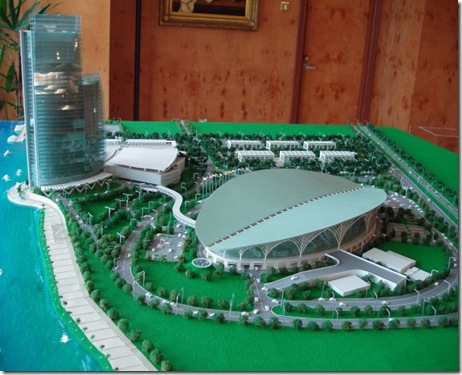
Design of the Kuching Tower
The Ground-breaking ceremony of the RM300 million state-of-the-art building was performed in October 2005 by the Chief Minister of Sarawak at a site located on the Kuching Isthmus, just east of Kuching City Centre.
Kuching Isthmus is part of the Kuching City Expansion Plan, which is in line with Sarawak Government’s vision to create a modern downtown to co-exist with the old historical Kuching city founded by the White Rajahs.
The Kuching Tower forms part of an integrated development plan by conglomerate Cahya Mata Sarawak (CMS) Group for the 240-acre Kuching Isthmus. Kuching Tower is owned by CMS Hotels Sdn Bhd, a subsidiary of Cahya Mata Sarawak Berhad. Construction is expected to complete in 2009.
The construction of Kuching Tower is to support the Sarawak Government’s initiative to build a fully-integrated convention centre in Sarawak in order to tap on the lucrative Meetings, Incentives, Conferences and Exhibitions, or more popularly known as MICE, industry.
Is that here the Kuching Tower will be built??Design of the Kuching Tower
6.09.2010
来自砂拉越的乐团-例外人!
来自我们砂拉越 古晋的乐团-例外人现在红起来了!他们带着要透过音乐来感动这世界的任务冲出古晋!

例外人在这个六月份宣传/签唱会行程
@14th June 4PM - AI FM专访 预录
@15th June 4.30PM八八六十事 电视访问(8TV)
@16th June 2PM - Celebrity Chat 现场节目
@17th-June5PM - 金河广场 - Kuala Lumpur -【签唱会】
@18th June 9PM - 988现场访问
@18thJune 10PM - 988 音乐耍LIVE (预录节目)
@20th-June 3PM - -Selayang Mall - Kuala Lumpur【签唱会】
@25th June 8pm - 富利华购物广场, Miri 【签唱会】
@26th June 630pm - 华利超级市场, Sibu 【签唱会】
@2nd-July 7PM - TheSpring ShoppingMall - Kuching 【签唱会】
例外人 大马记者会《首张同名概念EP》常青台

例外人主打歌- 姑娘, 你很漂亮 Girl, you are beautiful

太迟了

关于例外人
Subscribe to:
Posts (Atom)